

Reimagining industrial water: How Europe is managing risk, resilience, and reuse
Building on insights from Xylem’s "Reimagining industrial water: From commodity to strategic asset," this discussion with Verónica García Molina, Sr. Director, High Growth Verticals at Xylem explores how industrial operators across Europe are approaching water reuse in practice. It examines the treatment, digital, and phased reuse strategies shaping industrial decision-making, and how these approaches help teams improve water performance, strengthen resilience, and support more circular operations.
Xylem’s "Reimagining industrial water: From commodity to strategic asset" explores how industrial operators are rethinking water reuse to manage risk, strengthen resilience, and support more sustainable operations. With global demand for freshwater projected to outstrip supply by 40% by 2030, the pressure to move beyond linear water use is becoming more urgent. This Q&A with Verónica García Molina examines how those ideas are taking shape, from phased reuse pathways to hybrid treatment and digital capabilities being applied across Europe.
Across Europe’s industrial sectors, where are you seeing the biggest shifts in how operators think about water and the role reuse can play?
There is growing recognition that water can no longer be taken for granted. Many industrial operators are reaching that conclusion not just through policy discussions, but through direct experience. In recent years, seasonal limits and water restrictions in parts of Europe have had real impacts on production, forcing companies to confront the link between water availability and business continuity. When reduced water access translates directly into lower output or lost revenue, it changes how water is valued. That shift is often the catalyst to look for more serious alternatives, including reuse, which is increasingly aligned with stricter regulations and corporate sustainability goals.
When you engage with industrial teams early in their reuse journey, what assumptions or challenges tend to surface – and what helps teams start to assess reuse as a viable option?
Technology is often the first perceived barrier. Wastewater is commonly seen as difficult to treat, even though about 99% of it is water. The real challenge lies in managing the remaining 1%, and proven treatment technologies are designed to do exactly that. Those technologies have evolved significantly, giving operators more options to tailor treated water for industrial use.
Cost is typically the next concern. Questions around upfront investment, financing, and ongoing operating costs tend to dominate early discussions. What often reframes the conversation is a clearer understanding of how water quality affects industrial processes. As teams see how higher-quality treated water can reduce variability and risk, reuse starts to be seen as a practical way to protect production, not as a burden.
Many industries are exploring more phased approaches to reuse. Why does a step-by-step journey towards reuse resonate with European operators?
For many European operators, the ability to move forward incrementally is key. Instead of immediately committing to fully closed-loop reuse systems, organizations are often more comfortable beginning with intermediate reuse approaches that reduce freshwater demand and build confidence over time.
Two pathways tend to come up most often. Some operators look to alternative sources such as treated urban wastewater, which can be further polished for industrial use. Others focus on treating and reusing their own industrial wastewater on site. Both approaches are used across Europe and offer different advantages, from shared infrastructure and lower risk to greater independence and control over water supply.
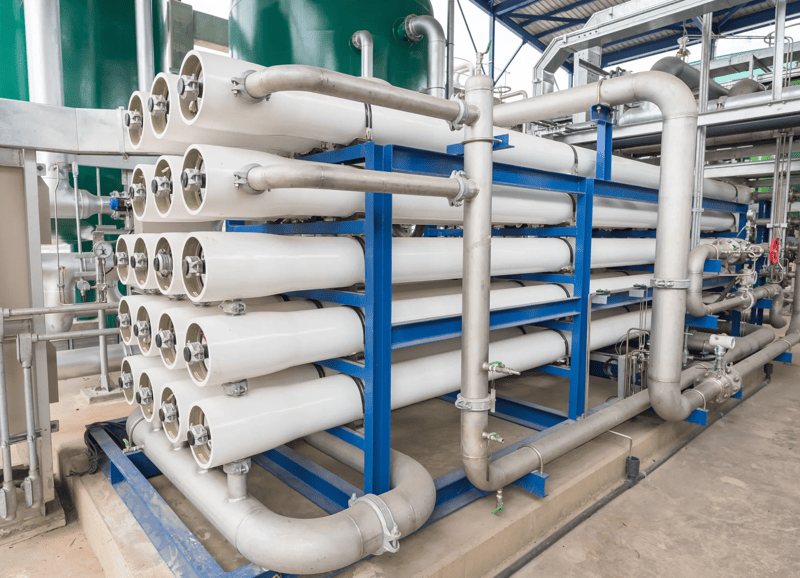
What makes these approaches practical is their modular nature. Operators can start with standard wastewater treatment that enables partial reuse and then add further treatment steps as needs evolve. While fully zero liquid discharge (ZLD) systems remain less common in Europe today due to the level of investment required, intermediate approaches such as minimum liquid discharge provide a practical step forward by balancing cost, performance, and operational risk.
These systems can reduce freshwater demand today while keeping the option open to scale toward more advanced, closed-loop solutions as requirements evolve.
Hybrid treatment systems and digital solutions are advancing quickly. Which capabilities are proving most valuable, and why?
What’s gaining traction is a more integrated approach to treatment, where different processes are combined to deliver consistent, reliable water quality across a range of industrial applications. Rather than relying on a single technology, operators are now looking at hybrid systems that can be adapted to their specific water characteristics and operational needs.
Digital solutions play a key supporting role. Their value is less about novelty and more about reliability and insight. Digital tools enable operators to monitor system performance in real time, anticipate issues, and maintain stable operations. As reuse becomes more central to operations, this level of visibility becomes essential.
An important change is also underway: treated water is no longer seen as a compromise. High-quality treated wastewater can be more consistent than water drawn from natural sources, which may vary seasonally or contain unexpected contaminants. That level of control over water quality and quantity helps improve process stability and gives operators greater confidence as they expand reuse.
Looking ahead, what gives you confidence about the future of industrial water reuse in Europe, and what steps can operators take now to accelerate progress?
The building blocks for industrial water reuse are now in place. The treatment technologies needed to support industrial reuse are well established, digital tools are making systems more reliable and easier to operate, and supportive funding mechanisms are helping operators move from interest to action by easing some of the upfront investment challenges.
These trends align closely with the solutions Xylem delivers globally, including advanced biological and membrane treatment, modular reuse systems, digital monitoring and optimization tools, and water management service models that help industrial operators reduce risk and scale reuse with confidence.
Momentum is already visible in specific sectors. In food and beverage, particularly beverages, high water use has driven earlier adoption of reuse approaches. In industries such as microelectronics, the opportunity extends beyond water itself to recovering high-value materials from wastewater, strengthening the business case for advanced treatment and reuse.
As reuse becomes more closely tied to operational resilience and water security, progress will come from steady action that strengthens reliability, protects production, and supports future growth.