

Yorkshire Water deploys the largest CoMag system in the world to protect UK rivers
As phosphorus limits tighten across the UK, wastewater utilities are turning to proven, scalable treatment solutions to protect water quality and plan for growth. At its Knostrop Wastewater Treatment Works, Yorkshire Water adopted Xylem’s innovative CoMag™ ballasted clarification technology to meet stricter discharge requirements while increasing treatment capacity and improving operational efficiency.
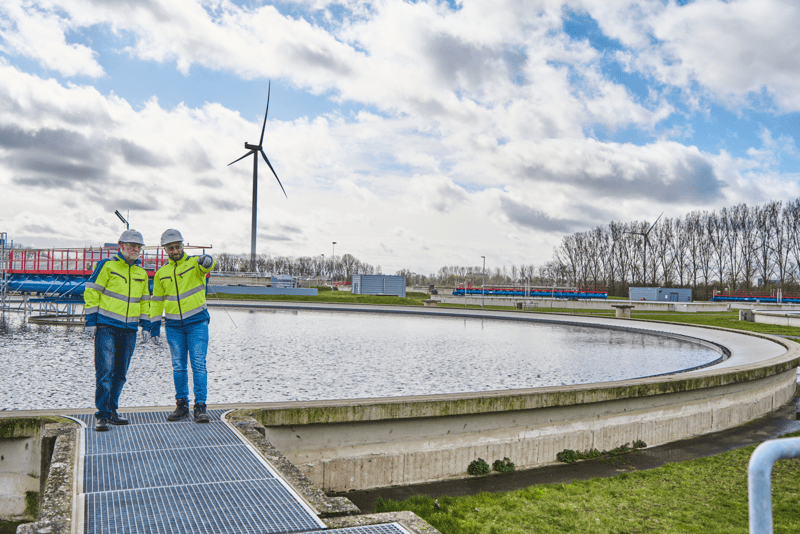
Serving nearly one million people in and around the growing city of Leeds, Knostrop is Yorkshire Water’s largest wastewater treatment site. When UK regulators tightened phosphorus limits for wastewater discharge, the utility needed a solution that could deliver compliance within the tight existing footprint without significantly increasing costs.
How did Yorkshire Water scale wastewater treatment while meeting new UK phosphorus regulations?
Yorkshire Water turned to Xylem’s CoMag™ ballasted clarification system, deploying the largest CoMag™ system installation in the world to date, as reported by Water Magazine. The result is a high-performance treatment upgrade that not only meets tighter phosphorus standards, but also boosts treatment capacity, improves process efficiency, and positions the site to support Leeds’ long-term wastewater needs with confidence.
Challenge: High levels of phosphorus in treated wastewater can trigger algal blooms, which deplete oxygen in rivers and damage aquatic ecosystems. In response, UK regulators require that many wastewater treatment plants, including Yorkshire Water’s Knostrop Wastewater Treatment Works, reduce the levels of phosphorus in their treated effluent down to low levels 0.4 mg/L and below. For Yorkshire Water, the challenge was clear: meet more stringent environmental standards while continuing to serve a growing population and maintaining cost and operational efficiency.
Solution: As part of a wider site £60m ($80m USD) upgrade, Yorkshire Water implemented a range of advanced treatment technologies including Xylem’s CoMag™ ballasted clarification system, to enhance tertiary solids removal.
Unique to Xylem, the CoMag™ system uses magnetite—a naturally occurring, high-density mineral—to increase the weight of precipitated floc. The heavier floc settles up to 30 times faster than in conventional clarification processes, significantly improving solids removal performance. This accelerated settling allows for higher treatment capacity, improved clarifier efficiency, and a much smaller footprint for final settlement—reducing space requirements and long-term capital costs.
The system also continuously recovers and reuses most of the magnetite, supporting Yorkshire Water’s sustainability goals while delivering ongoing operational efficiencies.
-
-
BioMag® System
Ballasted activated sludge dramatically increases biological treatment capacity and helps meet ENR limits.

Results: Since launching in September 2024, the CoMag™ system has enabled Knostrop to treat 75% of the site’s total flow through advanced tertiary clarification. Phosphorus levels have been consistently reduced to 0.25 mg/L, well below regulatory limits, with performance testing demonstrating levels as low as 0.1 mg/L.
The compact design delivers these results using a fraction of the space required by conventional approaches—804 m² for the CoMag™ system compared to more than 14,000 m² for traditional final settlement tanks—delivering performance in a tight existing footprint.
Following the success at Knostrop, Yorkshire Water has selected the CoMag™ ballasted clarification system for another major site, reinforcing its role as a scalable solution for meeting tighter phosphorus standards across the network.
A closer look: How regulators and utilities are tackling nutrient pollution
How do higher phosphorus levels damage rivers and lakes?
Phosphorus is an essential nutrient that supports plant, animal and microbial life. It plays a critical role in agriculture and food production, which is why it is widely used in fertilizers. However, when excess phosphorus enters rivers, lakes, and streams—often through wastewater discharges—it becomes a serious environmental concern.
High phosphorus concentrations stimulate excessive algae and aquatic plant growth. As this organic matter decomposes, it consumes dissolved oxygen, creating low-oxygen conditions that stress or kill fish and other aquatic organisms. In England, high levels of phosphorus remain the most common reason for water bodies failing to achieve “good” ecological status. According to the Environment Agency, sewage effluent accounts for approximately 55% of phosphorus entering rivers nationwide.
How are regulators addressing nutrient pollution from wastewater?
As nutrient pollution continues to impact surface waters, regulators across the UK and Europe are tightening discharge requirements for wastewater treatment plants. In England, the Environment Act 2021 sets legally binding targets to reduce phosphorus from treated wastewater by 80% by 2038, with an interim goal of a 50% reduction by 2028.
In parallel, the Water Industry National Environment Programme (WINEP), is driving action across the water sector. Over the next four years, more than 800 wastewater treatment works are required to reduce phosphorus discharges to the environment by 33% over the next four years.
Why is ballasted clarification effective for phosphorus removal?
Ballasted clarification significantly enhances solids removal and treatment capacity, making it a proven solution for meeting tighter phosphorus limits. The process uses a high-density inert material—such as magnetite—to increase the weight of biological or chemical floc. This added mass dramatically accelerates settling rates, improves clarification performance, and allows treatment systems to handle higher flows and load variations with greater stability.
Compared to conventional clarification, ballasted systems can deliver superior effluent quality at lower life-cycle cost, while reducing the footprint required for treatment upgrades. Xylem offers ballasted clarification solutions for both chemical phosphorus removal (CoMag™) and biological processes (BioMag™), alongside complementary filtration and phosphorus recovery technologies.
-
-
BioMag® System
Ballasted activated sludge dramatically increases biological treatment capacity and helps meet ENR limits.
Why does Xylem use magnetite in ballasted clarification systems?
Magnetite offers a unique combination of performance, durability, and sustainability. With a specific gravity of 5.2—more than twice that of silica sand—magnetite enables rapid and consistent floc settling. It is fully inert, readily available, and non-abrasive when embedded in biological or chemical floc, making it well suited for long-term operation.
Just as important, magnetite supports a circular economy. In both CoMag™ and BioMag™ systems, more than 90% of the magnetite is continuously recovered and reused, minimizing material consumption and operating costs.
How does the CoMag™ system help utilities improve efficiency and reduce cost?
Faster, more reliable treatment: The innovative CoMag™ system, unique to Xylem, embeds magnetite into floc to accelerate solid settlement up to 30 times faster than conventional methods. This enables utilities to achieve high phosphorus removal performance even under variable flow and load conditions.
Lower operating costs through magnetite recovery: The CoMag™ system continuously recovers magnetite using a magnetic drum, reducing ongoing material costs and supporting sustainable operations. The system is fully automated, requiring minimal operator effort and simplifying day-to-day management.
Smaller footprint, greater capacity: By dramatically increasing settling rates, the CoMag™ system allows clarifiers to be significantly smaller than traditional final settlement tanks. This compact design reduces space requirements, lowers capital costs, and enables high-capacity treatment within constrained sites.
At Knostrop Wastewater Treatment Works, the installation of a single high-rate CoMag™ ballasted clarification system delivers performance that would otherwise require significantly larger conventional infrastructure.
Solutions like CoMag™ ballasted clarification help utilities meet stricter phosphorus regulations while improving efficiency, controlling costs, and protecting the health of local waterways and communities.