

Texas satellite manufacturer achieves zero liquid discharge with a Xylem water reuse system
Industrial manufacturers that rely on metal processing face growing pressure to control wastewater costs, meet discharge requirements, and increase water reuse. Chris Riley, Technical Services Director at Xylem, explains how a Texas-based satellite manufacturer achieved zero liquid discharge and avoided wastewater hauling, using reverse osmosis, electrodeionization, and Water One® WX wastewater ion exchange.
Industrial manufacturers depend on water at nearly every stage of production, from cleaning and surface preparation to metal finishing, coating, and cooling. As advanced manufacturing expands and digital infrastructure grows, water is no longer just a utility. It is a strategic input to productivity, resilience, and growth in the new economy.
These processes generate large volumes of wastewater that must meet strict discharge limits. For many manufacturers, wastewater handling is no longer a back-end issue – it directly affects uptime, compliance risk, and operating costs.
Those constraints shaped decisions at a new satellite manufacturing facility in Texas. Built to support next-generation communication technologies — and without access to municipal sewer infrastructure — the site needed a way to treat and reuse process wastewater on-site. Instead of relying on frequent, costly hauling, the manufacturer implemented a zero liquid discharge (ZLD) system that recovers water for reuse, minimizes waste streams, and protects production in a water-constrained environment.
Zero liquid discharge at a satellite manufacturing facility in Texas
Challenge: The 700,000-square-foot facility manufactures next-generation communication satellites. Its production processes include water-intensive metal finishing and powder-coating pretreatment, which generate wastewater containing metals, total dissolved solids, and high salinity.
With no municipal sewer connection available, the site could not discharge to a publicly owned treatment works. The only alternative was off-site hauling. At an estimated cost of $500 per 1,000 gallons and roughly 70 million gallons per year, hauling would have resulted in tens of millions of dollars in recurring costs. It also would have added logistical complexity and increased the risk of production downtime due to waste handling.
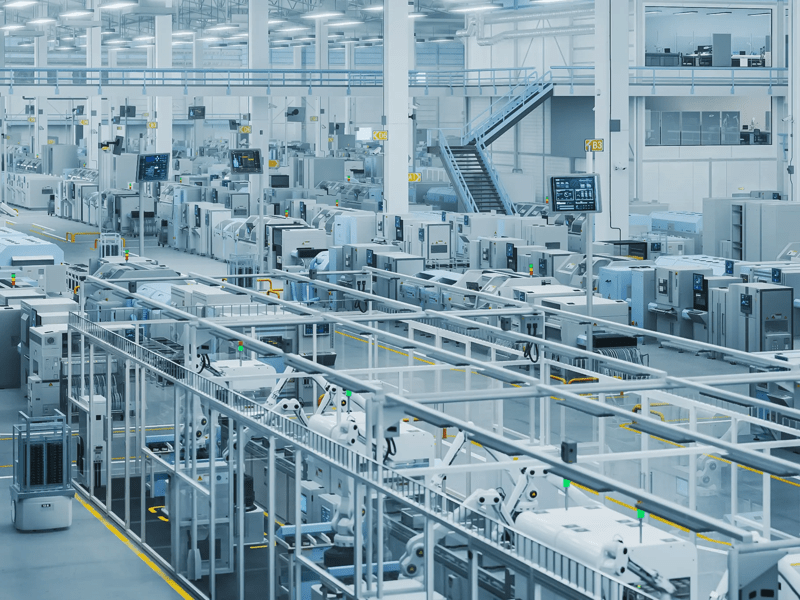
Solution: The manufacturer implemented a custom zero liquid discharge (ZLD) water reuse system from Xylem to treat and recycle wastewater from powder-coating pretreatment operations.
The multi-stage treatment train includes reaction tanks and clarification to remove metals, followed by media filtration and activated carbon. Reverse osmosis (RO) and electrodeionization (EDI) remove dissolved salts and produce high-quality water for reuse. A Water One® WX wastewater ion exchange polishing system provides a final safeguard, capturing trace contaminants and protecting reuse quality.
The system is supported by digital-first automation and continuous remote monitoring. Link2Site® remote monitoring provides real-time visibility into pressure, flow, and media condition. Automated alerts detect early signs of fouling or media exhaustion, enabling predictive maintenance and reducing the risk of unplanned downtime.
Results: Today, the facility reuses more than 95% of its process water, recovering over 66 million gallons annually. Eliminating routine wastewater hauling avoids tens of millions of dollars in potential disposal costs.
At the same time, digitally monitored, predictive operations protect production uptime and keep metals and dissolved solids controlled and removed within the closed-loop system.
95%
of process water reused
66
mil gallons recovered per year
30
million dollars saved
FAQ: Zero liquid discharge and industrial water reuse
What is zero liquid discharge, and why is it desirable in manufacturing?
Zero liquid discharge (ZLD) is an approach where a facility treats and reuses wastewater on-site rather than discharging it externally. For manufacturers, ZLD can eliminate the need for industrial discharge permits, reduce monitoring and reporting requirements, and avoid discharge fees or fines. It also provides greater water supply security in regions facing infrastructure limits or water stress.
Why do some industrial facilities implement or need ZLD?
Some industrial facilities implement ZLD when conventional wastewater treatment or sewer connections are not available. In other cases, ZLD is a strategic choice. By treating and reusing water on-site, ZLD can reduce long-term operating costs, protect against tightening discharge regulations, and support sustainability goals. It is especially relevant for greenfield facilities and operations in high-growth regions.
Can aerospace manufacturers discharge wastewater to municipal systems?
Many aerospace manufacturers can discharge wastewater if they obtain the proper industrial permits and meet pretreatment requirements. However, metal finishing processes introduce regulated contaminants that can make discharge impractical or costly depending on local infrastructure and limits.
What technologies are typically used in zero liquid discharge systems?
ZLD systems rely on a treatment train rather than a single technology. Typical components include chemical precipitation and clarification, media filtration, activated carbon, membrane systems such as reverse osmosis, and polishing technologies like electrodeionization or wastewater ion exchange.
-
Vantage® M284 Reverse Osmosis Systems
Vantage® M284 Reverse Osmosis (RO) units are pre-engineered and pre-assembled units designed for a variety of industrial and commercial applications. RO...

How are heavy metals managed within a ZLD system?
Heavy metals in a ZLD system are typically removed by converting dissolved metals into solids through chemical treatment, or by selectively capturing them using ion exchange or adsorption media. With Xylem’s Water One® WX Services, the media that captures metals is periodically removed and replaced, and the spent material is transported to permitted facilities for regeneration or disposal. This reduces the amount of hazardous waste handled on-site, simplifies compliance, and lowers safety and operational risk for plant staff.
-
Wastewater Ion Exchange Services
Utilizes ion exchange resin canisters for the removal of dissolved heavy metals from a variety of rinse water and wastewater streams.

How does digital monitoring improve industrial water reuse systems?
Digital monitoring platforms such as Water One® WX services provide real-time insight into water quality and system health. Continuous data and alerts allow operators to address issues early, maintain required water purity, and support audit and compliance needs.

How much can manufacturers save by reusing wastewater instead of hauling it off-site?
Savings vary by location and infrastructure, but in facilities where hauling is the only option, reuse can avoid substantial recurring costs. In other cases, the primary value is improved reliability, reduced compliance risk, and greater control over water availability as production grows.
Do zero liquid discharge (ZLD) systems apply beyond aerospace manufacturing?
Yes. ZLD and advanced water reuse systems are used across many industries that rely on water- and metal-intensive processes, including electronics, microelectronics, printed circuit boards, and automotive components. Even when full ZLD is not required, these systems can help facilities reduce wastewater volumes, manage metals and dissolved solids, and improve control over costs, compliance, and water availability.
Building resilient water systems for the new industrial economy
As advanced manufacturing expands and digital infrastructure reshapes the global economy, reliable water is becoming as strategic as power, data, and logistics. The facilities that thrive will be those that treat water not as a constraint, but as a managed asset — tightly integrated into operations, protected by digital intelligence, and designed for reuse from the start.
Across industries, Xylem helps manufacturers build resilient water systems that support growth in the new economy. By combining integrated treatment, digital monitoring, and managed services, Xylem enables facilities to reduce risk, conserve resources, and keep production moving — strengthening both operational performance and long-term water security for the communities and industries they serve.