

The Broomfield Wastewater Reclamation Facility (WRF) thickens waste activated sludge (WAS) and primary sludge to 6% prior to anaerobic digestion. Before being sent to centrifuges for dewatering and recycling of the biosolids through land application, the thickened anaerobically digested sludge is transferred to two concrete sludge holding tanks.
Both round tanks are 50' in diameter and 7’ deep. They were originally constructed in the 1950s as primary clarifiers, converted to sludge holding tanks in the 1980s, and retrofit with diffused air mixing in the late 2000s.
With the goals of reducing energy consumption, improving mixing, and reducing maintenance, the plant upgraded the mixing equipment in the thickened sludge holding tanks in 2020.
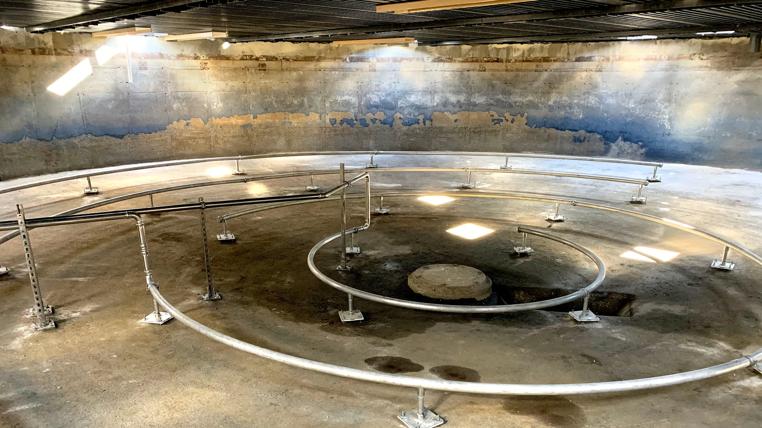
Concentric rings of nozzle headers uniformly mix the basin contents from the bottom up.
0,40
HP/1,000 FT3 mixing efficiency
50
% energy savings
Challenge
Prior to the upgrade, the two sludge holding tanks were mixed using a coarse bubble aeration system which presented the WRF with multiple challenges:
- The aeration system relied on positive displacement aeration blowers, which typically consume 50-60% of a plant's total electrical load.
- The large amount of hair, rags, and other stringy material that exists in the sludge led to diffuser fouling, resulting in high maintenance requirements and poor mixing effectiveness.
- The tanks are covered, resulting in confined space safety requirements to perform the necessary in-tank maintenance.
The tanks have sloped floors and a cone bottom. The coarse bubble aeration system was unable to suspend solids at the bottom of the tank due to the significant dead space beneath the aeration system.
Solution
The plant staff and their consulting engineering firm Tetra Tech Inc. selected EnviroMix’s BioMix Compressed Gas Mixing System to mix the sludge holding tanks. The BioMix system consists of two (2) 20 HP rotary screw compressors (one duty and one standby), an automated valve control panel, and concentric rings of nozzle headers. The total estimated power required for BioMix to achieve homogenous mixing of 6% sludge in this application is approximately 15 BHP, representing energy savings of more than 50% versus the coarse bubble aeration system.
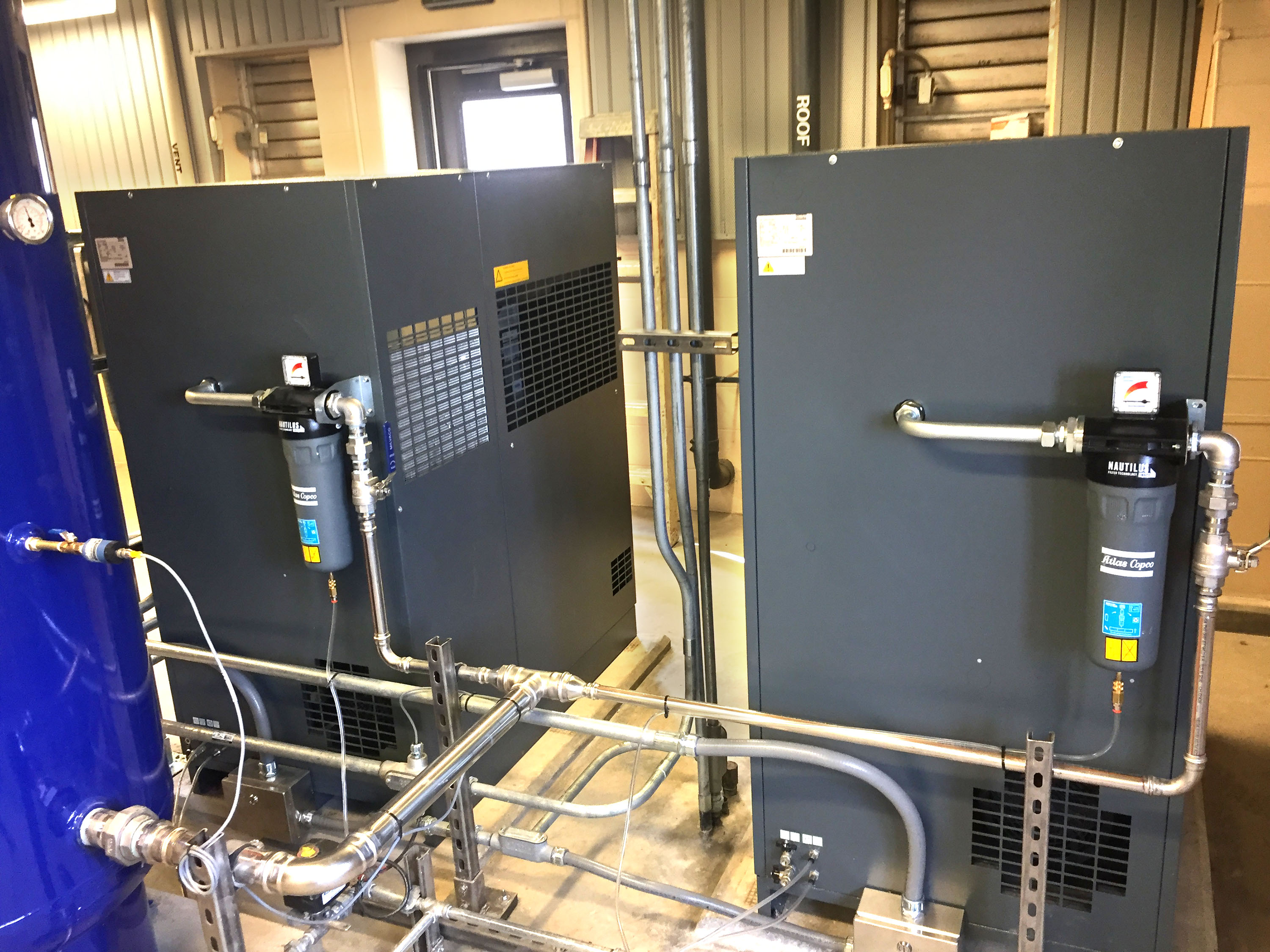
Low maintenance compressor system matches mixing air demand with duty and standby configuration.
The BioMix system has only non-clogging, self-cleaning components in the tank. With no mechanical or electrical components in the sludge, maintenance demands are minimized.
Featuring engineered-to-order headers and nozzles, the system integrates with any tank geometry or configuration. The circular headers easily conform to the slope of the floor, eliminating “dead spots.”
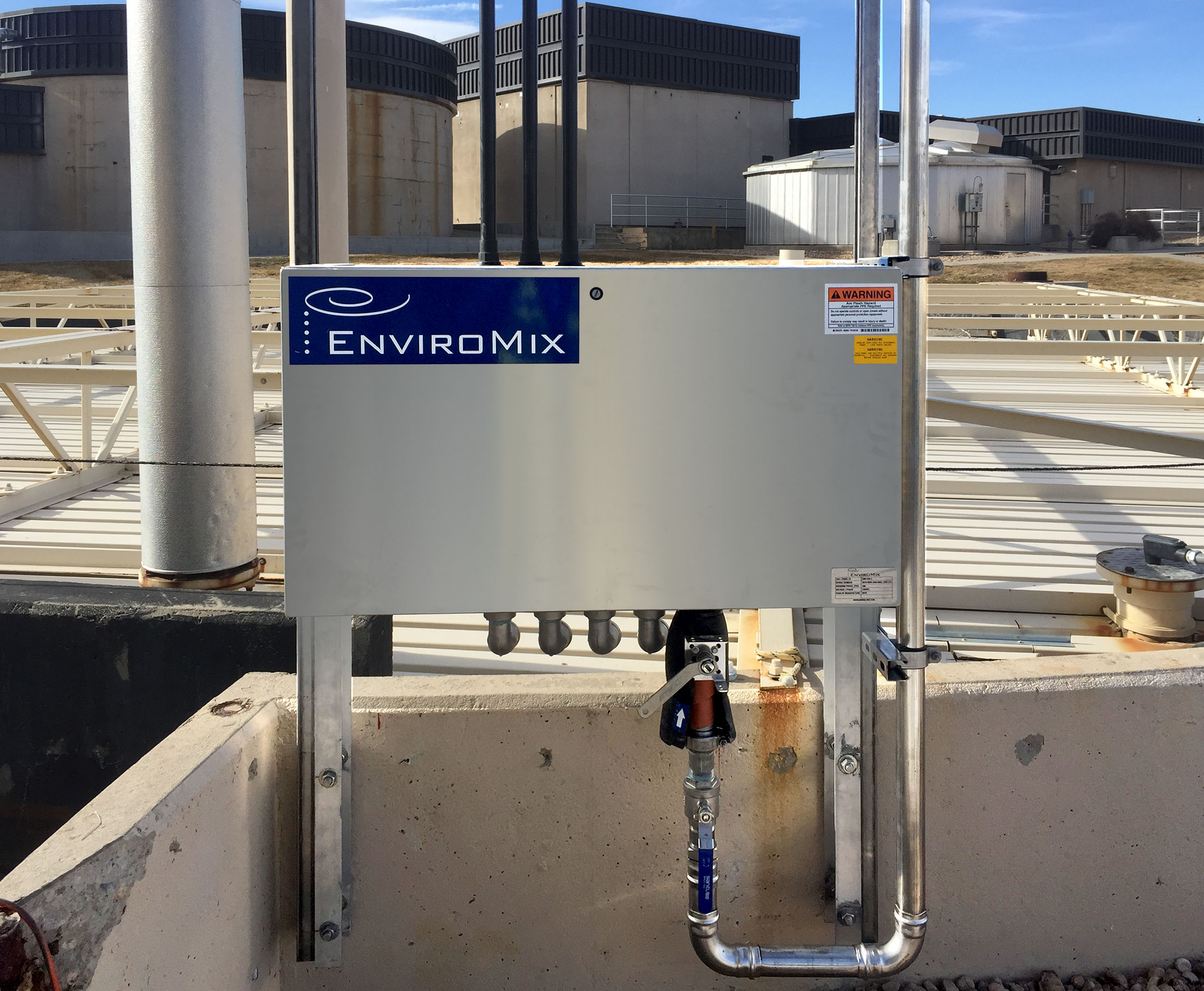
The valve module enables the optimal mixing regime by controlling air release duration, frequency, and sequence.
Results
The BioMix system enabled the Broomfield WRF to meet its goals of reducing energy consumption, improving mixing, and reducing maintenance. The BioMix system provides homogenous, energy efficient mixing while saving the plant approximately $10,000 annually.