

In 2013, Detroit Lakes Public Utilities began planning for a $30-million improvement project, taking their water reclamation facility (WRF) from a seasonal effluent phosphorus limit of 1 mg/L to a stringent effluent phosphorus limit of 0.066 mg/L. The planning team considered many different options, including different facility locations, different discharge locations, and seasonal versus year-round discharges.
The team chose to maintain the existing discharge location, and they began construction of an upgraded facility on the existing site in 2018. The upgraded facility replaced an outdated trickling filter process utilizing anaerobic digestion with a new membrane bioreactor (MBR) process utilizing aerobic sludge digestion producing Class B sludge for land application.
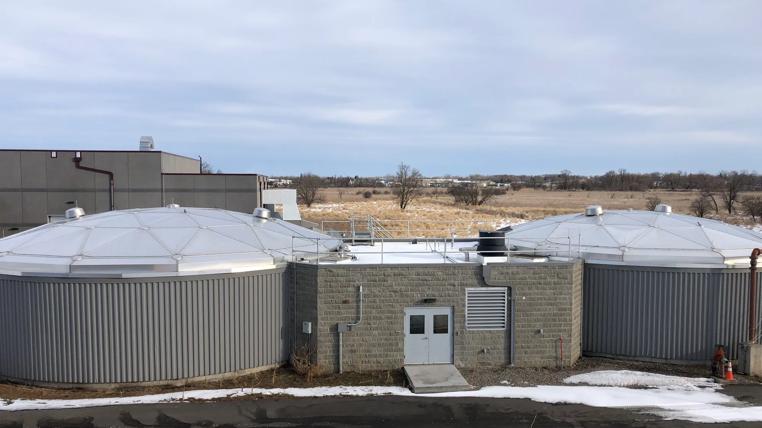
Detroit Lakes WRF’s aerobic digesters.
0,25
HP/1,000 FT3 mixing efficiency
77
% energy savings
Challenge
In the updated MBR facility, solids are wasted off the return activated sludge (RAS) line to a membrane thickening tank. Following thickening, solids are pumped to two aerobic digesters. The anaerobic digesters were converted to aerobic digesters to minimize the rerelease of phosphorus. The WRF needed an energy-efficient aerobic digestion solution that could optimize phosphorus removal and produce Class B sludge
Solution
EnviroMix’s BioCycle-D Optimized Aerobic Digestion Process was selected for the aerobic digesters, delivering 77% energy savings compared to conventional aerobic digestion.
The driving factors for Detroit Lakes’ selection of an MBR and BioCycle-D Optimized Aerobic Digestion Process were the site constraints and the low effluent phosphorus limit of 0.066 mg/L. This low concentration limit was driven by a Total Maximum Daily Load study for the nearby St. Clair Lake. The WRF needed to reduce the mass phosphorus load down to 198 kg/yr — a 94% reduction of the previous permitted discharge. The BioCycle-D process was able to be retrofit into the existing anaerobic digester tanks, and the unique operation of the process ensured that phosphorus remained in the sludge.
BioCycle-D operates on the principle of alternating aerobic and anoxic conditions to optimize digestion. The alternating cycles, combined with a sludge processing mode, ensure phosphorus remains sequestered in the sludge and not in the supernatant returned to the head of the plant. Furthermore, the BioCycle-D process decouples aeration from mixing — in other words, the function of mixing is no longer provided by the diffused aeration system as it would in a conventional system, allowing for much smaller blowers and significant turndown capability.
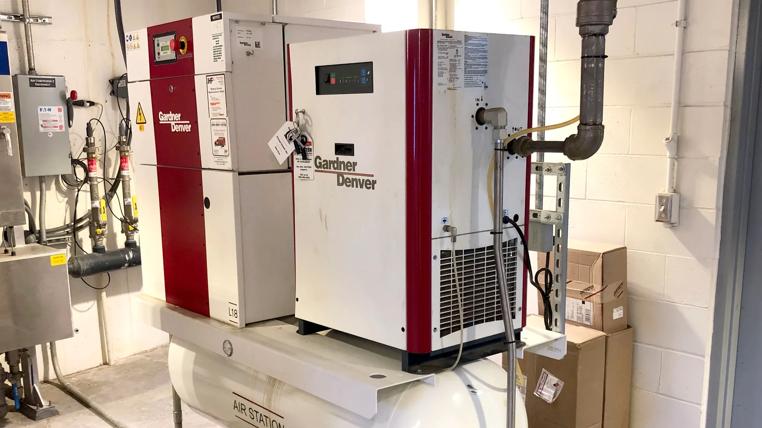
BioCycle-D utilizes compressors to mix the digesters with less than 15% of the horsepower required by the conventional aerated mixing approach.
Results
BioCycle-D delivers the Detroit Lakes WRF:
- Optimized aerobic digestion with class B biosolids for land application.
- Annual power cost savings of over $100,000 at design loading, based on $0.10 per kWh.
- Requirement of three 60 HP duty blowers, as opposed to three 125 HP duty blowers with the conventional approach.
- Ability to mix tanks with cone bottoms that are 8 feet deep — a major barrier for alternative mixing systems.
Due to local industry process changes, the WRF is receiving approx. 30% more solids loading than anticipated. To accommodate this increased loading, EnviroMix process engineers worked with facility staff to modify the digester operation from parallel to series operation. Even in these challenging circumstances, the plant is extremely pleased with the phosphorus capture capability in the digesters, which reduces the loading back to the head of the plant. Over a 10-month period between 2020 and 2021, the effluent averaged 0.057 mg/L total phosphorus.