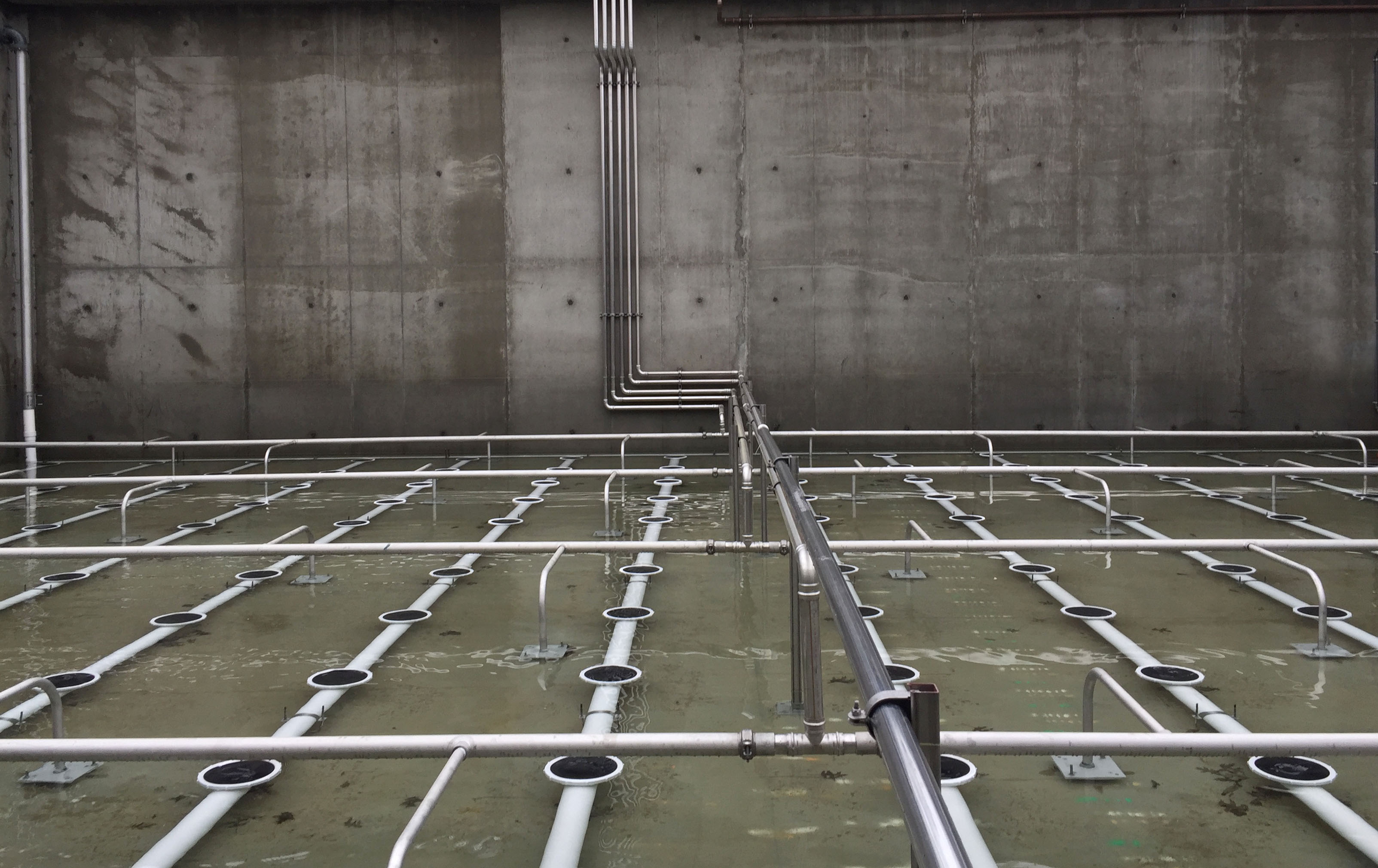
In 2018, the City of Benton, Illinois, constructed a new wastewater treatment facility to replace its decades-old plant and provide improved treatment that meets nutrient removal requirements. The new facility was designed to treat 1.65 million gallons of wastewater per day using an oxidation ditch which facilitates nitrification and biological phosphorus removal.
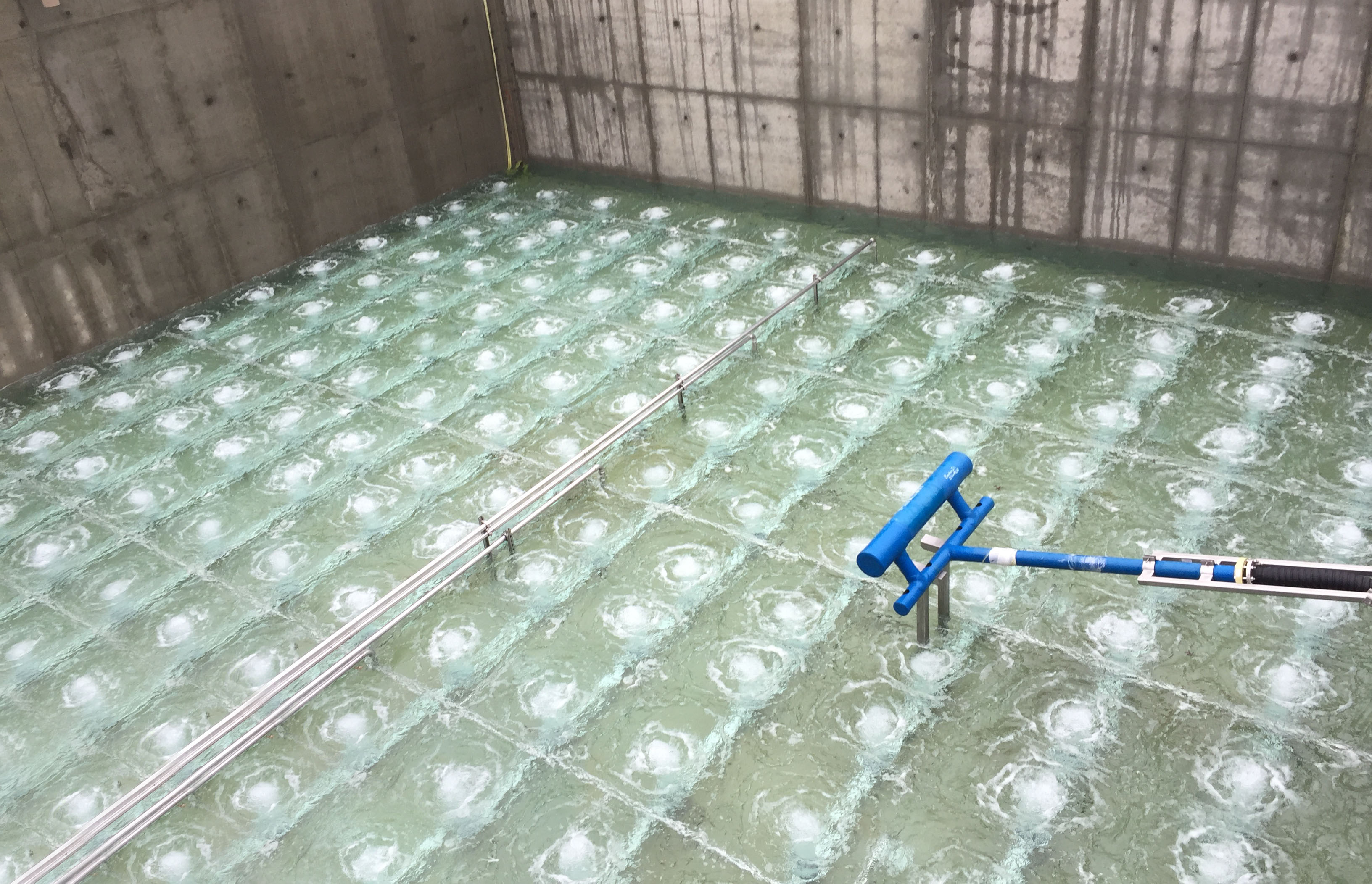
Decoupling aeration from mixing optimizes efficiency and process control.
0.13
HP/1,000 FT3 mixing efficiency
72
% energy savings
Challenge
A conventional aerobic digester uses diffused aeration to meet process oxygen demands and mixing demands. In other words, the aeration system provides (1) the oxygen to microorganisms as needed for the digestion process and (2) the mixing energy needed to keep the basin contents mixed at all times.
Oftentimes, and especially for treatment works that have extended aeration secondary processes, the air required to mix is greater than the air required to satisfy the oxygen demand — this results in over-aeration which leads to uncontrolled nitrification, depletion of alkalinity, and increased energy consumption.
The City of Benton needed an aerobic digester solution that optimized digestion in an energy efficient manner. When the aeration system is designed solely based on the oxygen requirements and the mixing system is designed solely based on the mixing requirements, efficiency and operational flexibility are both maximized.
Solution
EnviroMix’s BioCycle-D Optimized Aerobic Digestion Process was selected as an integral part of the new plant design because of the significant energy savings and improved sludge digestion through automated process control that the system provides.
Unlike a conventional aerobic digester that uses diffused aeration for both mixing and process oxygen demands, BioCycle-D controls and optimizes the digestion process by right-sizing the diffused aeration system to satisfy process oxygen demand and applying energy efficient mixing through the use of the BioMix™ Compressed Gas Mixing System.
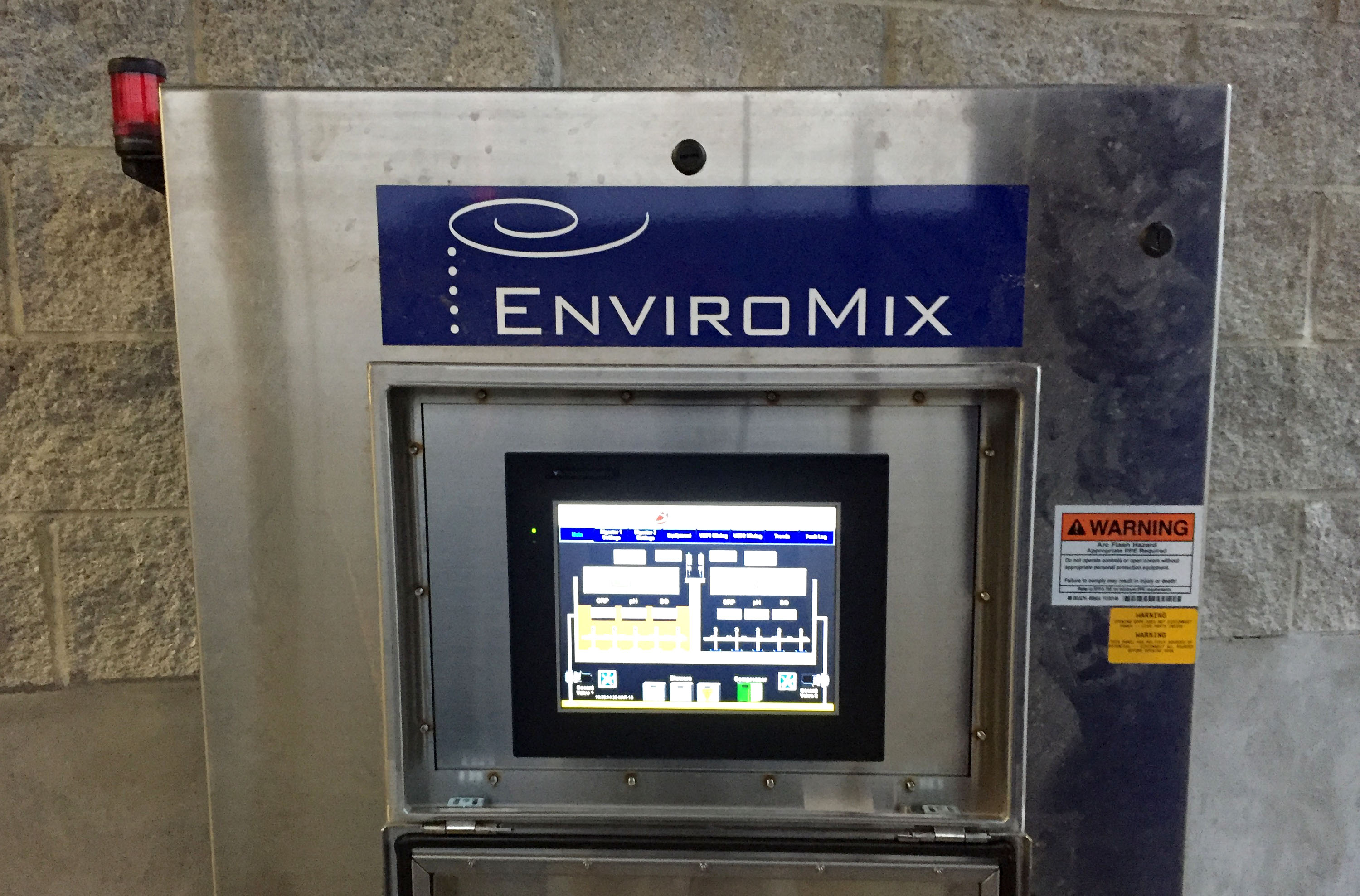
Automatic operation through instrumentation feedback and intuitive operator interface.
BioCycle-D maximizes sludge destruction, minimizes energy consumption, and provides process control by decoupling aeration from mixing and utilizing automated operation through instrumentation feedback. By regulating the aerobic phase of the process through DO instrumentation feedback, optimized air delivery and effective digestion are achieved. Controlling the anoxic phase of the process through pH/ORP monitoring and efficient mixing via BioMix Compressed Gas Mixing, enables denitrification and alkalinity recovery while preventing phosphorus release in the digester supernatant. The process benefits of optimized digestion also result in improved sludge dewaterability.
Results
The Benton wastewater treatment facility is experiencing over 70% energy savings versus a conventional diffused air mixing system designed at the Ten State Standards volumetric airflow rate of 30 scfm per 1000 ft3 of tank volume.