

Organized in 1965, the Boxelder Sanitation District provides sanitary sewer services to customers near Fort Collins, CO. The district, which maintains 100 miles of sewer lines, constructed a state-of-the-art wastewater treatment facility (WWTF) in 2013 to keep pace with the rapid growth of the area.
In 2021, Boxelder expanded and upgraded the WWTF to accommodate future population growth and new stringent effluent discharge limits on nitrogen and phosphorus. Increasing capacity from 3.0 MGD to 4.6 MGD, the comprehensive project encompassed many process improvements, including two new aerobic digesters. The upgraded facility was designed to produce effluent containing less than 7 mg/L total inorganic nitrogen, ensuring appropriately treated water is returned to nearby Cache la Poudre River.
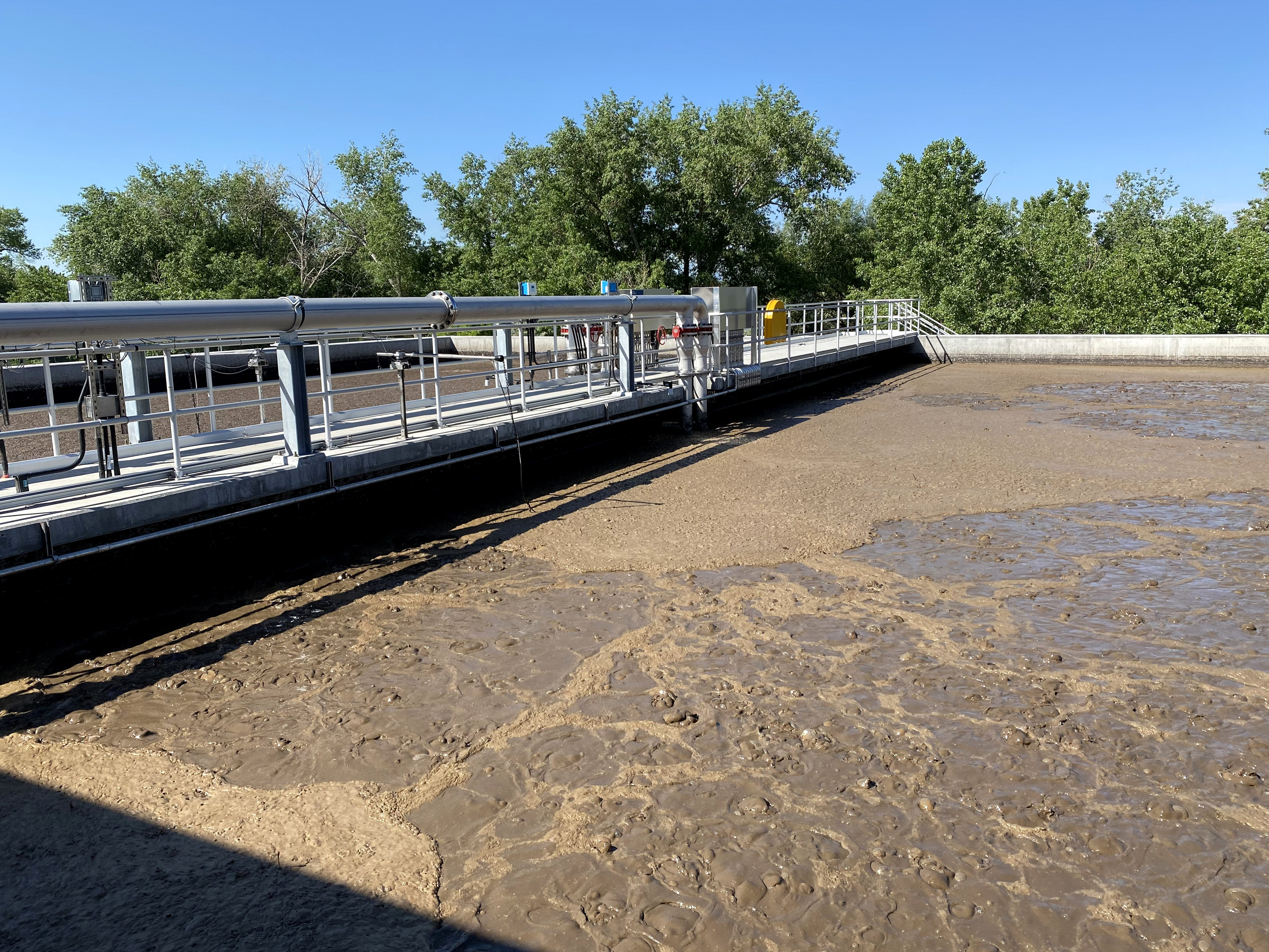
BioCycle-D’s alternating aerobic and anoxic cycles maximize VS destruction and improve sludge dewatering.
0٫20
HP/1,000 FT3 mixing efficiency
75
% energy savings
Challenge
Prior to 2021, Boxelder utilized a sludge storage lagoon that recycled high amounts of nutrients to the secondary process, reducing efficiency and necessitating expensive sludge removal. Before the upgrade, Boxelder was spending around $400,000 annually to dredge out their waste stabilization pond.
Using a construction management at risk (CMAR) delivery method, the district selected Moltz Construction, Inc. to consult on the development and construction of the project. Moltz evaluated conventional aerated mixing aerobic digestion technology alongside EnviroMix’s BioCycle-D Optimized Aerobic Digestion Process.
In a conventional aerated mixing aerobic digestion process, aeration is used to both provide the oxygen needed for digestion and completely mix the tank contents. There is little to no automated process control or instrumentation feedback. This approach results in very high levels of energy consumption and high concentrations of P and N recycled to the secondary process.
Solution
EnviroMix worked with Boxelder’s engineer Burns & McDonnell, designing the aerobic digestion process to meet the sludge treatment needs of the expanded system. The BioCycle-D process is designed by right-sizing the diffused aeration system to satisfy process oxygen demand and applying energy efficient mixing through a BioMix Compressed Gas Mixing System. The process decouples aeration from mixing, facilitating independent control over oxygen delivery and mixing, thus preventing over-aeration and wasted energy.
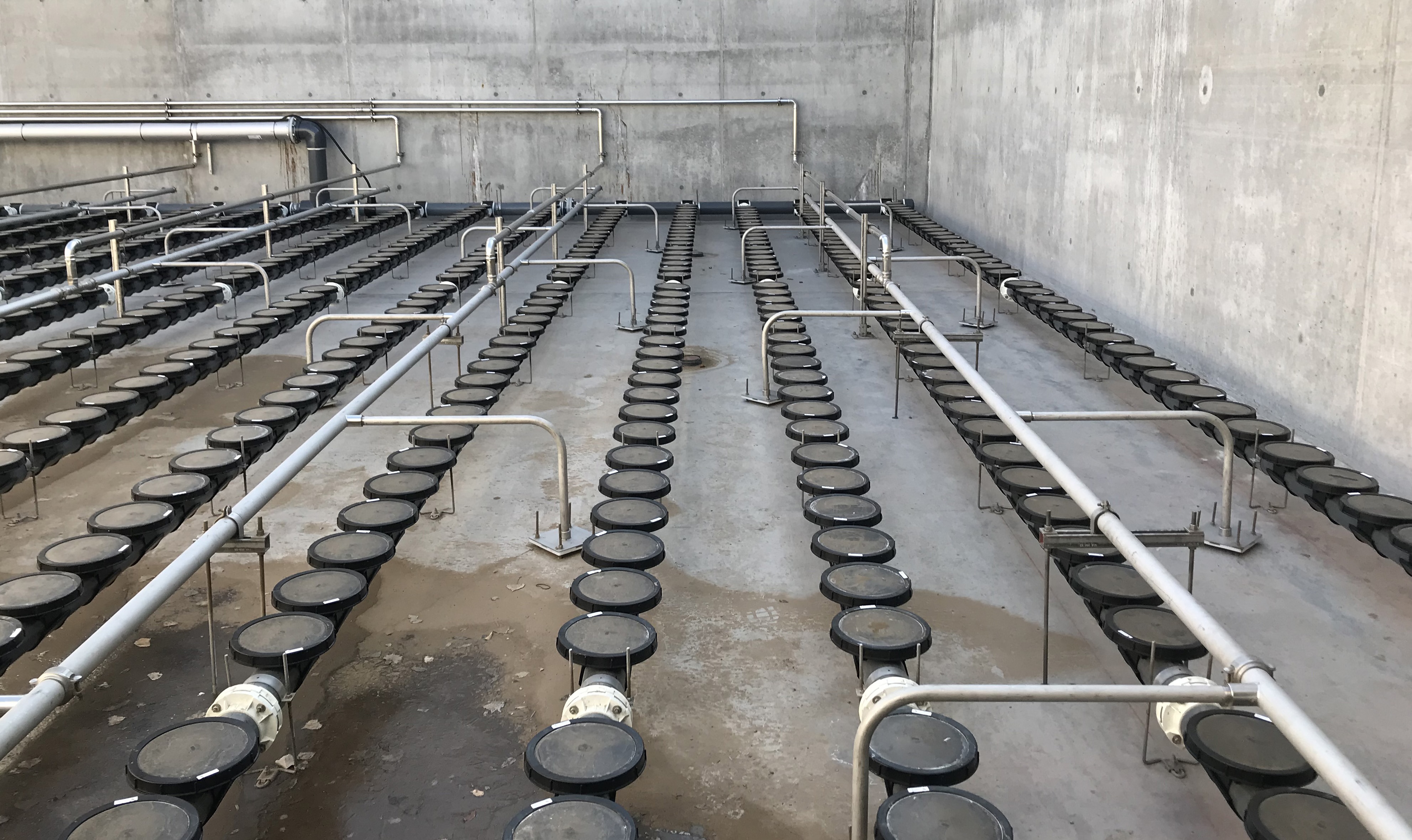
Decoupled fine bubble diffused aeration delivers oxygen and the BioMix Compressed Gas Mixing System provides efficient mixing.
The BioCycle-D process solves the problems of the conventional approach by utilizing dissolved oxygen (DO) and oxidation reduction potential (ORP) instrumentation, allowing for real-time control to address changing process conditions. Through online sensor feedback, the controller automatically transitions between an aerobic cycle for volatile solids destruction and nitrification to an anoxic cycle for denitrification, alkalinity recovery, and energy savings.
Results
The BioCycle-D process was ultimately selected as it offered the lowest total cost of ownership. By utilizing the decoupled system, Boxelder reduced projected energy consumption by 75% versus conventional aerobic digestion estimates, saving the plant more than $175,000 annually.
“I’m very pleased with the energy use. The power needed for the digesters is much less than we were anticipating,” commented Craig Hibbard, WWTP manager. Also, regarding maintenance, he added, “We don’t have any subsurface mixers we have to haul out of there that could get fouled. 90% of the repairs are doable above ground.”
The cyclic aeration controls of the BioCycle-D system substantially reduce ammonia and nitrate levels in both the digester supernatant and pressate return streams, preventing nitrogen spikes in the secondary process.
“Very shortly after [BioCycle-D] startup, it was clear that nitrate in the return stream was really low — like less than one part — and it didn’t require much effort,” stated Hibbard.