

Search Results
-

-
Kraft Foods achieves excellent nutrient removals
Due to an expansion in potato chip production, the snack food plant required additional wastewater treatment capacity. It needed to be able to meet strict discharge limits for biochemical oxygen demand (BOD), total suspended solids (TSS), ammonia nitrogen (NH3-N), total nitrogen (TN), and total phosphorus (TP) regulations.
-
Low-pressure UV system ensures reliable and sustainable service water supply
The Böseler Goldschmaus GmbH & Co. KG site features its own modern wastewater treatment plant (38,500 ECW). To always ensure high water quality, a reliable solution was sought to keep the proportion of microorganisms, viruses, and multi-resistant germs safely below the prescribed limits without the use of chemicals.
-
Ozone Solves Listeria Problem
A fish process facility in Norway detected Listeria monocytogenes in their facility and contacted Trond Storebø of Naustor Technology, Evoqua’s partner in Norway. Within three weeks, Naustor had acquired one of Evoqua’s new PC Series ozone disinfection systems. The use of ozone has made the products safer, enhanced the shelf-life for the fresh produce and protects the company’s brand.
-
Risks associated with the use of dispense gases in a food and beverage service establishment
A dispense gas is simply a pressurized gas used for dispensing drinks. The gas of choice is typically carbon dioxide (CO2), especially for carbonated drinks such as soda and beer. Carbon dioxide is commonly employed in the food service environment in a variety of equipment systems such as carbonation, refrigeration, and....
-
Saint-Gobain Containers, Inc. reduces DI water operation cost
Saint-Gobain Containers, Inc., of Milford, Massachusetts was using separate bed and mixed bed service deionizers to purify water for manufacturing glass containers used in the U.S. wine, beer, beverage, spirits and food industries.
-
Sugar company finds sweet solution for odor control
The sugar company produces approximately 4,500,000 cwt. of sugar per year, resulting in high-strength wastewater that creates odors, especially during the company’s peak season in the spring and summer. The company was using a series of basins, such as ponds and ditches, to cool, equalize, settle, and digest the organic wastewater.
-

-
Town of Creston Pretreats Brewery Wastewater with ADI-BVF® Reactor
Creston’s wastewater treatment facility treats both domestic and industrial effluent. The Columbia Brewery, which feeds its wastewater to the town, underwent major expansions that significantly increased its wastewater flows. Creston was not equipped to treat the volume of wastewater generated by the brewery. Town officials were eager to solve the problem, especially since the brewery was Creston’s largest employer.
-
Xylem helps Ken’s Foods save on operation costs
Ken’s Foods’ wastewater treatment system required an upgrade to treat additional flow and load beyond the treatment plant’s design capacity. Lack of space made the upgrade challenging, so Ken’s Foods investigated ways of converting its existing anaerobic system. Finding an innovative wastewater treatment technology that could help it meet discharge limits and save on operational costs was also important.
-
Xylem helps Latin American dairy company manage wastewater
When Grupo LALA's plant in Torreón, Coahuila, Mexico, prepared to expand and introduce new product lines, the dairy processor knew its existing lagoons would not have enough capacity to handle the increase in plant production. Moreover, the open air lagoons were causing odor concerns. The plant is located in a busy, commercial area, so addressing the odors was important for community relations.
-
Xylem solves Strauss Dairy’s wastewater dilemma
Strauss Dairy, part of the Health & Wellness segment of Strauss Group Ltd., is Israel’s largest private dairy. The family-run business processes cheese, yogurt, and flavored milk drinks. The BVF reactor provides Strauss Dairy with a highly effective, yet low-maintenance pretreatment system that is resilient to a variety of operating conditions and loads. Effluent COD is less than 750 mg/l, and SS is less than 300 mg/l at design loading.
-
FAQ
FAQs for Ozone Systems
Evoqua’s ozone technology experts address some of the most frequently asked questions about ozone disinfection and ozone water treatment.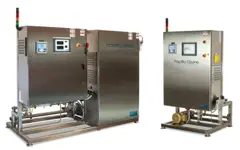
-
FAQ
Zero liquid discharge (ZLD) FAQ for Xylem’s Vacom One-Step
Get answers on ZLD cost, pretreatment, reliability, fouling control, and installation timeline. Learn how Xylem’s Vacom One-Step simplifies ZLD. -
Video
BIB FAQ: Low syrup issues
Is your bag-in-box (BIB) system working but not supplying enough syrup? Here we cover a number of things that you can do to troubleshoot the situation.
-
Video
BIB FAQ: Troubleshooting a continuously-operating syrup pump
Leaks, loose connectors, or air in the BIB bag can cause the syrup pump to run nonstop. Here's what to check and how to fix it.
-
Webinar
IONPURE® CEDI for High Purity, Deionized Water Video
Safe, reliable and affordable water for pharmaceutical, power, microelectronics and other industrial markets.
-
Article
Choosing the right partner for water equipment specification
With varied water quality, changing regulations, and a changing workforce, it’s more important than ever to select a qualified partner for water treatment solutions
-
eBook: Sustainable water for food and beverage processors
This eBook provides case studies that illustrate the methods and benefits of sustainable practices around water treatment
-
-
Article
Ozone Makes an Impact in the Food Industry
Henrik Steffens, Sales Manager at Evoqua, outlines the advantages of ozone as disinfection for the food and beverage sectors
-
Article
Poor Water Quality is Draining Your Process Cooling Efficiencies
Suspended solids can wreak havoc on a process cooling system
-
-
Blog Page
Pasco transforms food industry wastewater into a resource for community growth
Pasco, Washington, built a shared system for six food plants that turns wastewater into clean water and renewable energy while protecting local resources.


