

With a population of roughly 120,000 residents, the city of Lakeland, FL, is located roughly 35 miles east of Tampa. The city operates three wastewater reclamation facilities (WRFs). The Glendale WRF in southeast Lakeland began operation in 1926.
In 1987, the city changed its discharge point by constructing a 1,600-acre wetlands treatment system (WTS) near Mulberry, FL. Effluent from Glendale WRF is pumped to the WTS and ultimately flows to the Alafia River and into Tampa Bay. Currently, Glendale is permitted for 13.7 MGD design flow.
As part of two separate Energy Services Performance Contract (ESPC) projects in 2016 and 2017, EnviroMix’s BioMix Compressed Gas Mixing was selected as the best technology to provide mixing in three anoxic selectors and two sludge holding tanks.
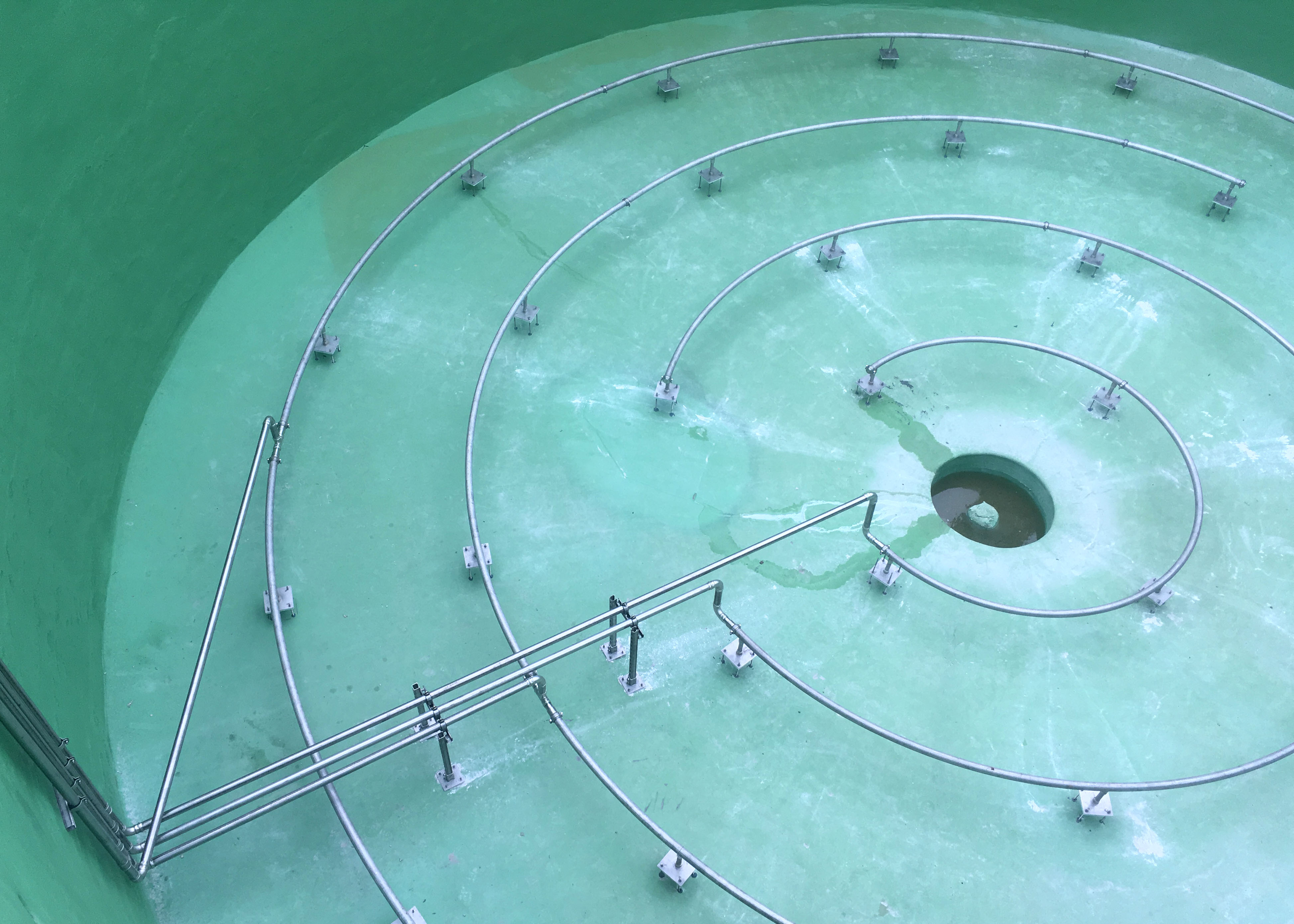
BioMix nozzle headers conform to the slope of the sludge holding tank floor for optimal bottom-up mixing.
0٫08 - 0.11
HP/1,000 FT3 mixing efficiency
70
% energy savings
Project I
In 2016, Trane and their partner, King Engineering (now Ardurra Group), approached the city with an ESPC to provide energy and O&M savings via an upgrade to Glendale’s bioreactors. The city awarded a contract to Trane to retrofit the bioreactor blowers, aeration system, and anoxic selector mixing system. The project included installation of high-speed turbo blowers, high-efficiency fine bubble diffused aeration, and a BioMix Compressed Gas Mixing System for three anoxic selectors.
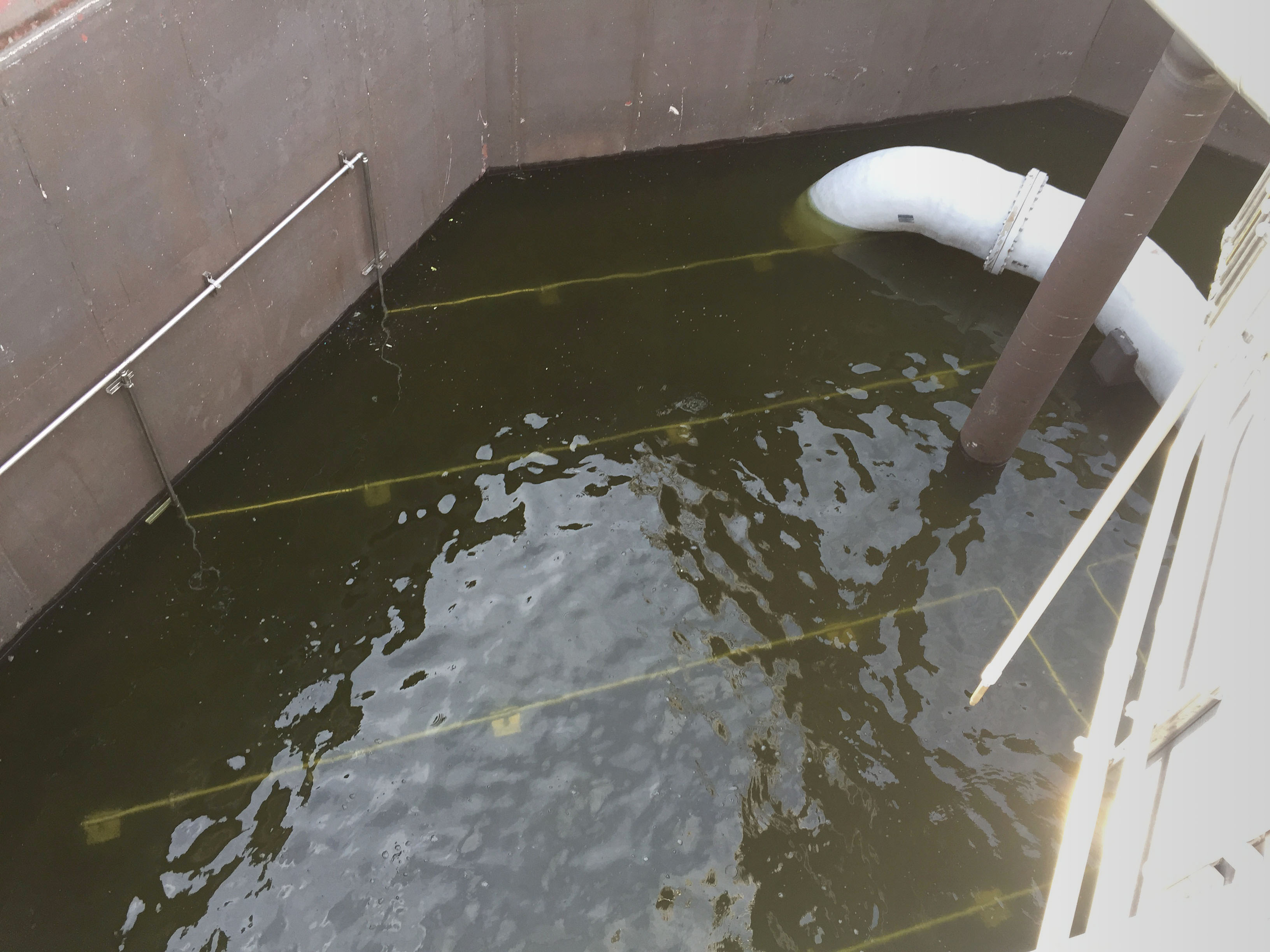
BioMix nozzles and headers are located near the tank floor as shown in one of Glendale’s anoxic selectors.
Project II
In 2017, shortly after the implementation of the bioreactor upgrade, the city awarded an ESPC to Schneider Electric to implement a combined heat and power system associated with their anaerobic digestion and sludge handling equipment. The project included installation of a biogas engine generator, gas conditioning equipment, heat exchange equipment, controls, pumping, and a BioMix system for two sludge holding tanks.
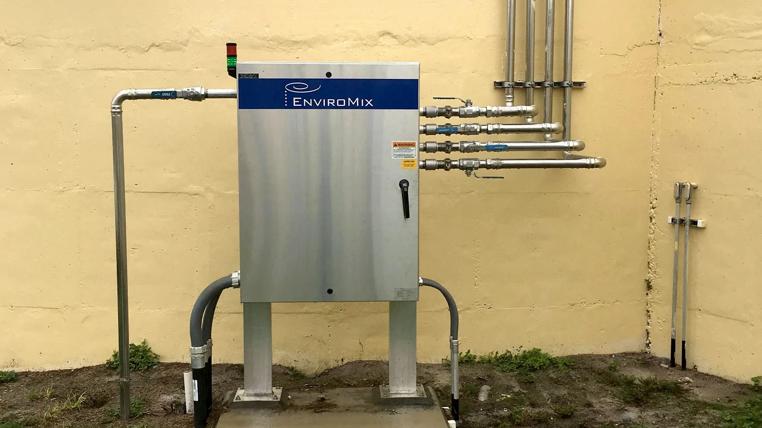
A tank side valve module controls the mixing regime in the sludge holding tank.
Results
In both cases, BioMix was selected because of its energy efficient, low maintenance design versus diffused aeration or mechanical mixing technologies. Additionally, in the 2016 project, BioMix provided process improvements over the existing diffused aeration system utilized to mix the anoxic selectors.
When asked about the EnviroMix solution, chief operator John Dickson stated, “It’s maintenance free compared to mechanical mixers.” Noting how straightforward the BioMix system is, Mr. Dickson added, “It was exactly what it was explained to be.”
The two ESPC projects combined provide Glendale WRF an estimated 70% energy savings versus diffused aeration or mechanical mixing technologies, resulting in savings of approximately $50,000 each year for the city of Lakeland.