

Sazerac bottling plant improves effluent quality by 99% with anaerobic membrane treatment technology
Sazerac’s Northwest Ordinance Distilling facility upgraded its inherited wastewater system with Xylem’s anaerobic membrane bioreactor (AnMBR) technology – boosting treatment capacity, improving effluent quality, and eliminating costly wastewater hauling. The upgrade helps the distillery avoid surcharge fees, extend existing infrastructure, and support long-term operational and environmental sustainability.
For nearly four centuries, the Sazerac name has stood for excellence in distilled spirits. What began with a world-renowned French cognac, later inspiring New Orleans’ iconic Sazerac Coffee House and the cocktail that bears its name, has grown into one of the world’s largest spirits manufacturers, with more than 450 brands produced at facilities across the globe.
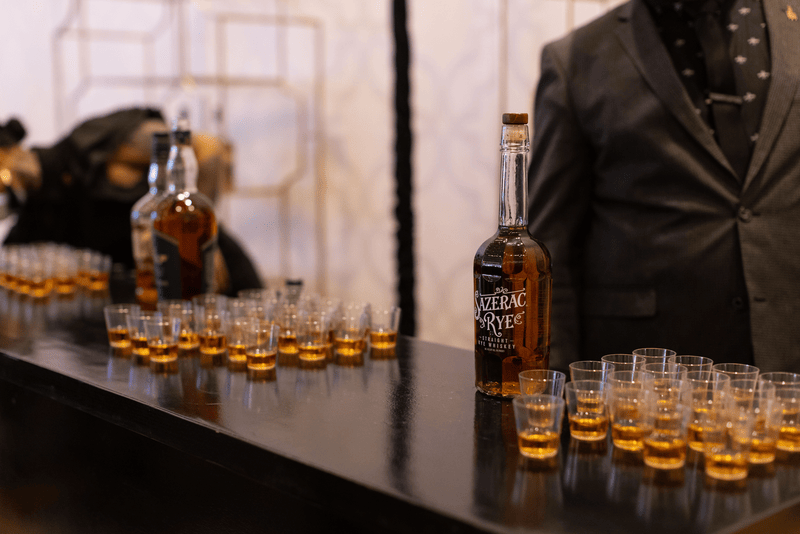
As demand for premium spirits continues to grow, Sazerac has expanded strategically, acquiring heritage liquor brands, scaling production and investing in new facilities. In 2018, Sazerac purchased the dormant 460,000 square foot General Mills Pillsbury plant in New Albany, Indiana, and converted it into the Northwest Ordinance Distilling (NOD) bottling facility.
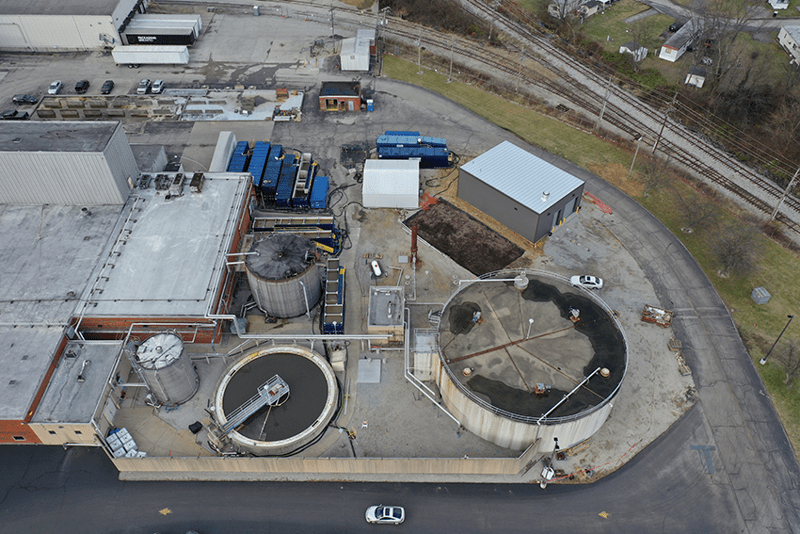
But bringing the site back online came with challenges. The plant’s existing wastewater treatment system, an aging anaerobic reactor and clarifier, wasn’t built for the plant’s new production needs. To keep pace with growth without taking on major capital upgrades, Sazerac set out to find a more reliable treatment solution that could strengthen performance while making the most of existing infrastructure.
How can industrial beverage manufacturers avoid expensive effluent surcharge fees?
Managing effluent surcharges is a growing priority for industrial beverage manufacturers. When wastewater discharged to a municipal treatment plant contains high amounts of alcohol and sugar, it contributes to Biochemical Oxygen Demand (BOD) and Chemical Oxygen Demand (COD). This higher strength wastewater requires more energy and treatment steps at the municipal plant – expenses that are sent back to the manufacturer through surcharge fees.
For distilleries and bottling facilities, on-site pre-treatment can be the most economical path forward. By reducing organic solids before discharging, beverage manufacturers improve the quality of the effluent sent to their municipal utility, avoiding costly surcharges and extending the life of existing plant infrastructure.
How can settleability problems impede pre-treatment and drive-up operational costs?
When Sazerac began repurposing the plant’s existing assets for wastewater pre-treatment, poor solids settleability became a roadblock. The clarifier couldn’t handle higher solids loading, which limited the concentration of suspended solids the anaerobic reactor could maintain. Operators also had to consistently perform checks and maintenance to manage adequate effluent quality.
These constraints capped the volume of wastewater the system could pre-treat each day. As a result, around 75% of the wastewater generated from Sazerac NOD needed to be hauled away to the municipal utility at significant expense to be fully treated. Looking for a more cost-effective approach, Sazerac upgraded its system with Xylem’s innovative membrane technology.
How does membrane technology enhance performance and increase treatment capacity?
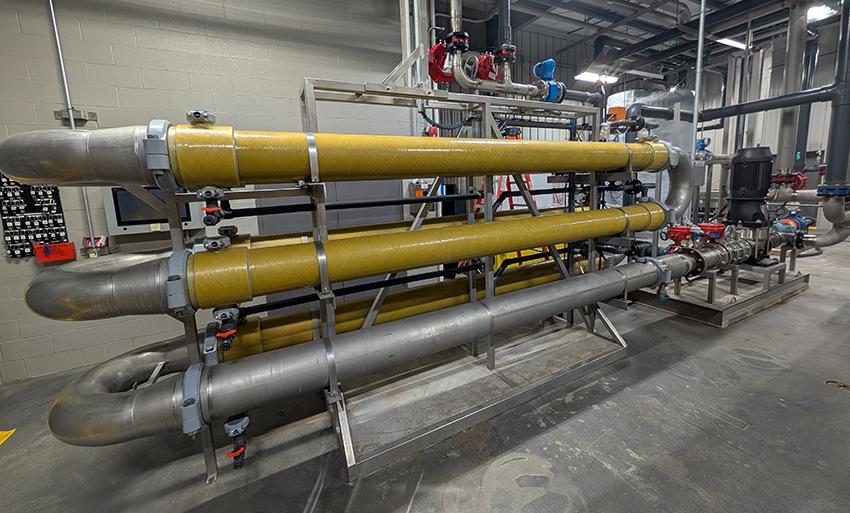
Sazerac partnered with Xylem to convert its treatment system to an anaerobic membrane bioreactor (AnMBR), pairing the existing complete-mix reactor with best-in-class, modular crossflow ultrafiltration membranes. With this approach, the plant can completely retire the clarifier and replace it with high-efficiency solids-liquid separation.
-
ADI® Anaerobic Membrane Bioreactor (AnMBR)
The latest innovation in biological wastewater treatment.

The membranes provided full biomass retention and far more stable process control, reducing day-to-day intervention by Sazerac operators. By consistently generating effluent with very low COD, BOD and negligible Total Suspended Solids (TSS) concentrations, the membranes improved the quality of the effluent being discharged to the municipal treatment plant by 99% - helping Sazerac reliably meet discharge limits and avoid surcharge penalties.
The membranes also significantly expanded the treatment system’s production capacity. Solids inventory in the reactor increased from less than 3,000 mg/l to 16,000 mg/l, enabling wastewater flow to increase by 300%. The upgrade eliminated the need for hauling wastewater altogether, resulting in significant operating cost savings for the company. And because the AnMBR system boosted both hydraulic and organic loading capacity without requiring new reactor tanks, Sazerac avoided expensive treatment plant upgrades.
How did the anaerobic membrane upgrade transform Sazerac’s NOD plant overall treatment performance?
Modernizing the system with Xylem’s anaerobic membrane technology has reshaped performance at Sazerac’s NOD facility. The plant now consistently produces high-quality effluent that avoids surcharges and lessens impact on the local municipal utility, extends the life of the industrial plant’s existing infrastructure, and supports future growth. Treatment capacity is significantly higher; operating costs are lower; and the plant is no longer dependent on hauling wastewater off-site.
With its transformative work at Sazerac NOD, The Sazerac Company is delivering big benefits to its business today, while advancing the facility's long-term environmental and economic sustainability, extending the same standards of excellence it brings to its fine spirits to its wastewater treatment operations and the New Albany community.