

Water innovation and teamwork in action at Lucas Oil Stadium, Indianapolis
Hosting the world’s largest swim meet at Lucas Oil Stadium required supplying and maintaining two million gallons of crystal-clear, temperature-controlled pool water from a single municipal source. Using Xylem filtration, UV, pumping and heat exchange technologies, temporary pools achieved continuous disinfection and recirculation and consistent water quality throughout the event.
As swimmers prepared to practice and compete in two massive pools built temporarily in the middle of Lucas Oil Stadium, water experts rose to a different type of challenge. Deliver 2 million gallons of water through a massive piping and filtration system and ensure water clarity for swimmers and viewers alike. This is no easy feat.
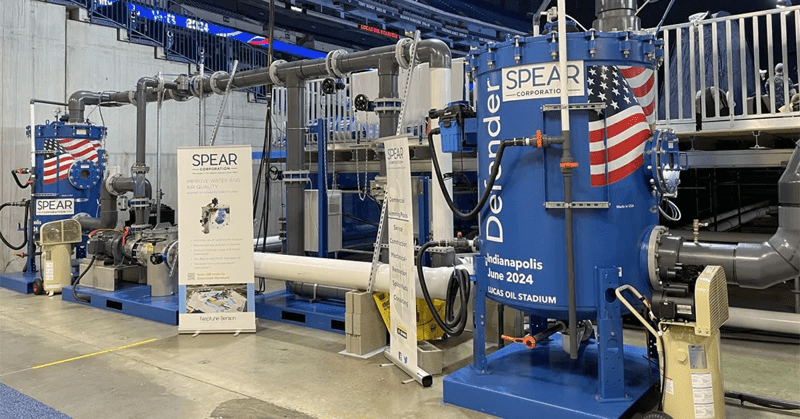
Xylem technology, including Defender® filters, Wafer® UV systems, Guardian™ strainers, Bell & Gossett pumps and heat exchangers, came together to support the recirculation of 4,800 gallons per minute. This water was continuously filtered down to 1 micron during the week-long event. After filtration, the water flowed through the heat exchangers to ensure a consistent and optimal pool temperature for approximately 2 million gallons of water.
And all of this water originated from a single fire hydrant just outside Lucas Oil Stadium. A few technologies were key in this water’s journey from hydrant to pool.
Filtration is key to delivering crystal-clear water
Water was filtered directly from the fire hydrant using a Defender® Regenerative Media Filter, Wafer® UV System, Guardian™ Strainer, greenDrive™ variable frequency drive and Dominion® butterfly valve. This combination can recirculate each drop of water every three hours, ensuring the clearest and cleanest water possible for the competition and warm-up pools while also reducing odors associated with combined chlorine.
Heat exchangers and pumps deliver optimal water and air temperatures
Since its original construction in 2008, the Lucas Oil Stadium has already been equipped with Bell & Gossett shell and tube heat exchangers, Hoffman steam traps and more for the building’s heating and cooling systems.
To make this event possible, temporary plate and frame heat exchangers were added to the building’s existing system to heat the warm-up and competition pools to a reliable 78-79 degrees Fahrenheit. Steam travels directly from the Indianapolis Central Steam Plant across the street and enters Lucas Oil Stadium via an underground tunnel. Heat exchangers convert the steam to hot water for the building’s heat, and some of the hot water passes through the temporary Bell & Gossett plate and frame heat exchangers to heat the pools.
Delivering safe water at scale
Large public events require water systems that protect people while performing reliably under intense, short-term demand. By integrating advanced filtration, disinfection, pumping and temperature control, Xylem helped ensure consistently clear, safe pool water throughout a record-setting competition. This performance safeguards water quality for participants and demonstrates how adaptable infrastructure can support complex, high-demand community events.